Wet vs Dry Media for Leaf Studies: Comparing Approaches
Wet vs Dry Media for Leaf Studies: Comparing Approaches
Leaves are ideal subjects for focused study: they combine clear structural features—veins, margins, petioles—with ephemeral qualities like translucency and surface sheen. Choosing wet or dry media influences what you notice and how you record these qualities. This note compares the two pathways to help inform short field exercises and studio follow-ups.
What wet media emphasise
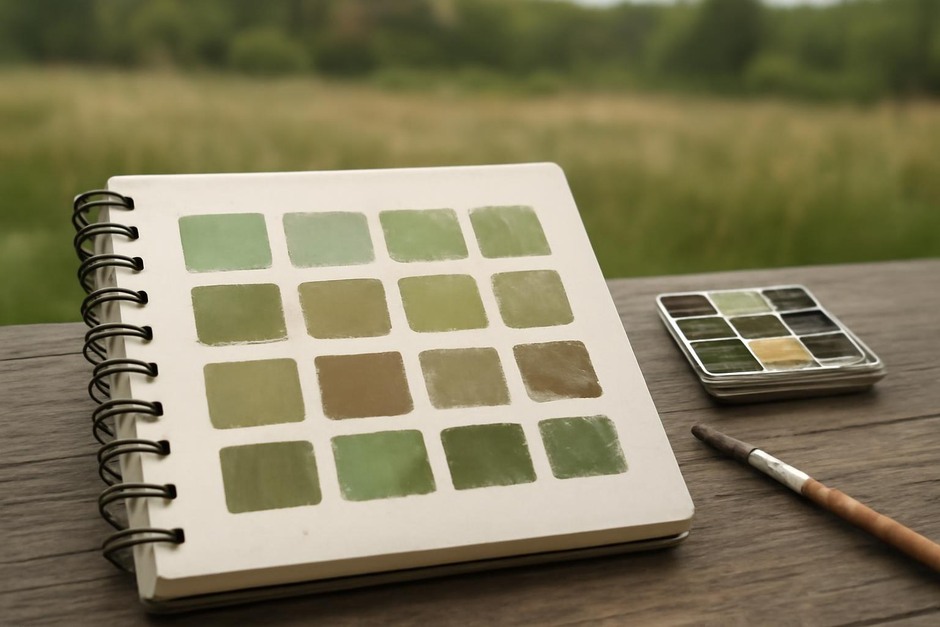
Watercolour and ink washes excel at capturing translucency and general tonal atmosphere. A diluted wash will reveal how light passes through a thin leaf and how wetness deepens pigment. Wet media are efficient for broad statement: paint a single wash to show the overall value and follow with darker veins. Glazing allows subtle adjustments to colour temperature and saturation over time.
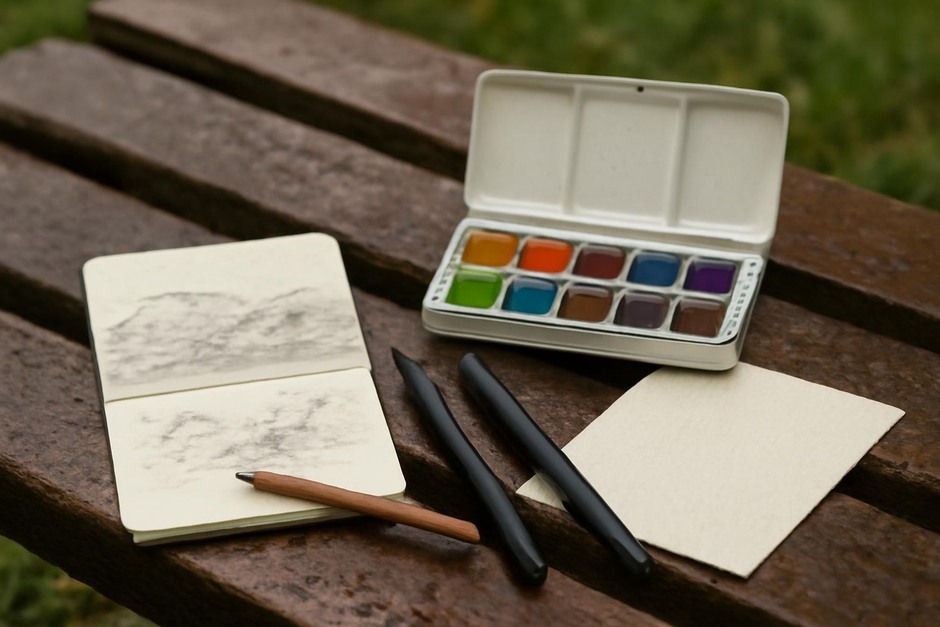
On the practical side, wet media require some surface that can handle moisture and a stable platform to work on. In the field, rapid drying or unexpected drizzle can alter results. Still, for an immediate sense of colour and light relationships, wet media are hard to beat.
What dry media emphasise
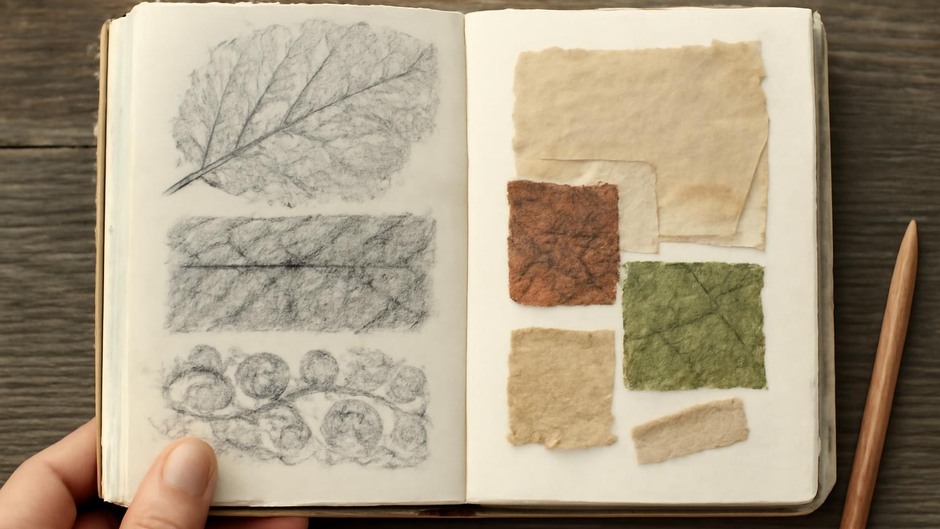
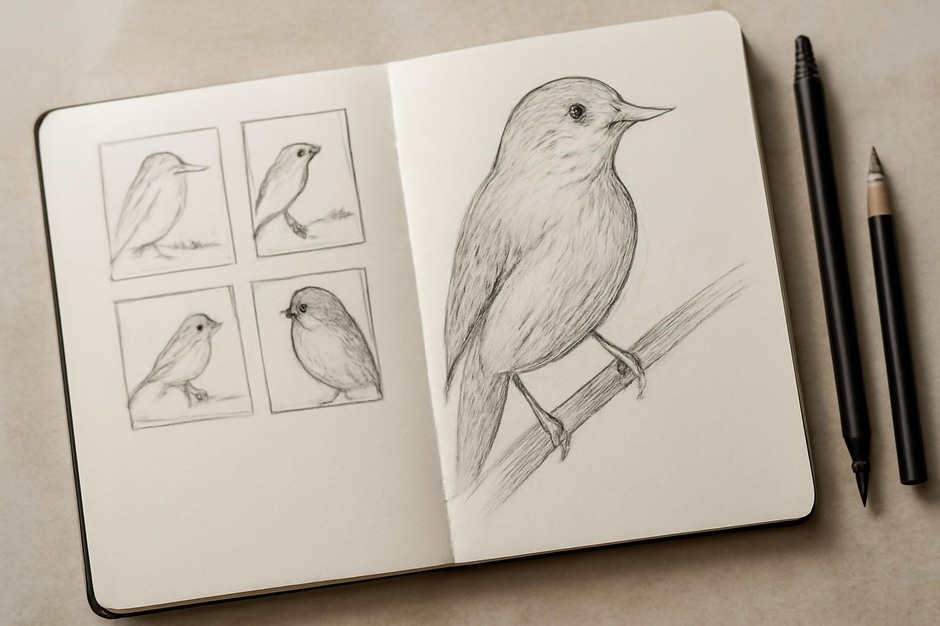
Graphite, coloured pencil and pastel draw attention to edge definition, vein structure and micro-texture. Dry media allow controlled layering for crisp lines and fine detail. Coloured pencils in particular are good for building veins, marginal serrations and small blemishes without worrying about drying times. They can also be used over light washes to combine the best of both worlds.
Drawbacks include slower coverage for overall tone and a tendency to produce flatter-looking colour if too many layers are not applied. Dry media reward careful observation and small incremental adjustments.
Hybrid strategies
Combining wet and dry approaches often yields richly informative studies. A common method is a light wash to block in colour and value, followed by dry media to define veins and edges. Alternatively, a detailed graphite sketch can be scanned or referenced in the studio and a larger wet study painted free of precise linear constraints. Both strategies help you maintain fidelity to structure while capturing luminous colour.
Practical exercises
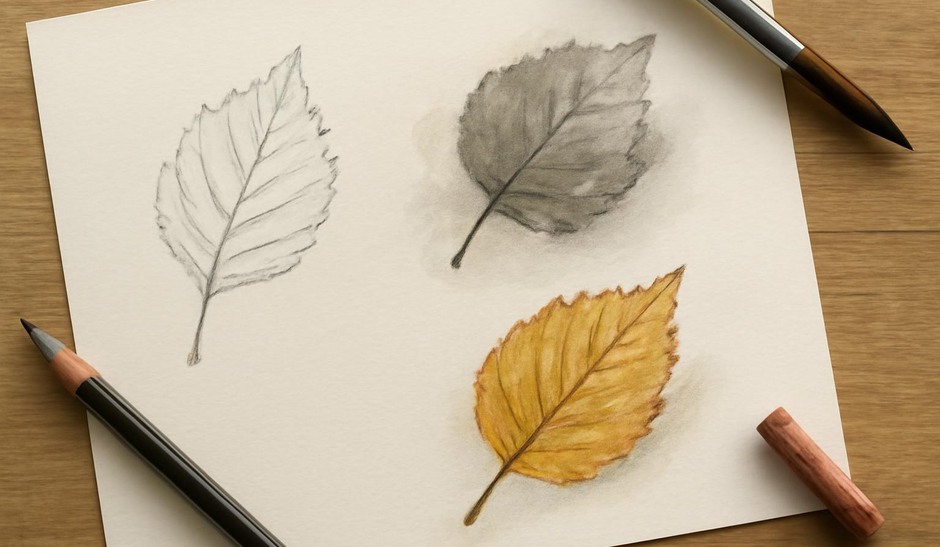
- Choose a single leaf and do three small studies: a quick wash emphasizing translucency, a graphite or coloured-pencil drawing emphasizing vein pattern, and a hybrid study with a wash base and dry-media detail.
- Time each study: spend 10 minutes on the wash, 20 minutes on the dry study, and 25 minutes on the hybrid. Note how time allocation changes your observation.
- Record a short note on material behaviour: how did the wash spread on paper? Was layering with pencil on top effective?
Observational priorities
Wet media tend to focus your attention on value and colour relationships; dry media emphasize structure and texture. If your goal is to understand translucency and how leaf colour shifts under different lights, start with washes. If you want to map vein architecture and surface texture, start with dry media. The hybrid approach supports both, and repeating the same leaf study in each method clarifies what each medium highlights.
These comparisons are offered as a way to refine observational habits. The best choice depends on the question you bring to the leaf: are you studying light, structure, surface or a combination? Trying the three approaches in quick succession builds a fuller visual record and deepens both seeing and making.