Field Sketching: Choosing Portable Materials for Variable Weather
Field Sketching: Choosing Portable Materials for Variable Weather
This piece reads like a studio note about carrying a small kit into uncertain conditions. When you plan to sketch outdoors, the tools you bring will shape not just the marks you make but how you respond to damp air, gusts of wind and sudden light changes. Below I outline several companion approaches and note their practical trade-offs without declaring one superior.
Pencil and eraser: simplicity and control
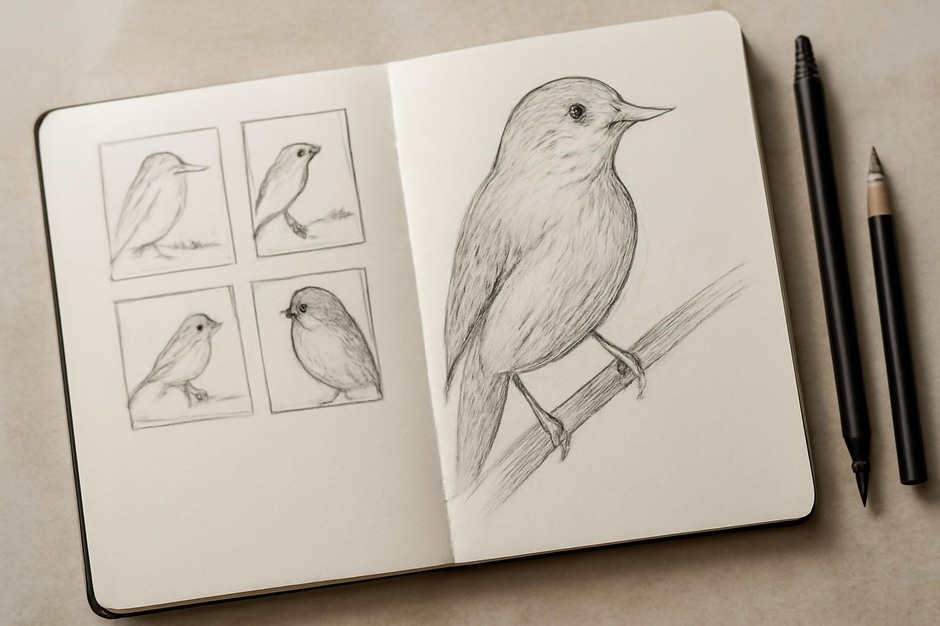
Pencil remains the most adaptable basic tool. A few grades—HB for construction, 2B for soft shadowing and a hard 2H for light mapping—cover many tasks. Pencils tolerate moisture better than ink when kept in a sealed case, and they allow quick tonal notes that can be developed later in the studio. The downside is that graphite smudges; a small folder or page guard helps. An eraser shield is useful for preserving nearby marks while lifting specific highlights.
Pen and waterproof ink: clarity and permanence
Fine-liner pens or fountain pens with waterproof ink produce crisp lines that read well at small scale. They resist accidental smudging and are resilient in light rain if the ink is fully waterproof. However, pens demand a steadier hand and offer less forgiveness than pencil. For many observers, combining a pen outline with light pencil underdrawing preserves clarity while leaving room for later refinement.
Compact watercolour kits: colour on the spot
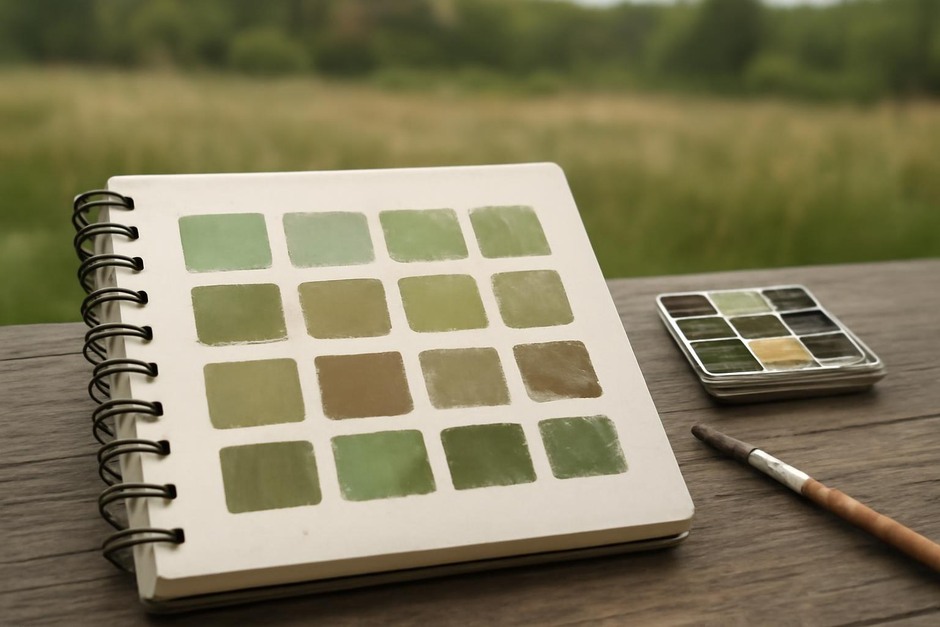
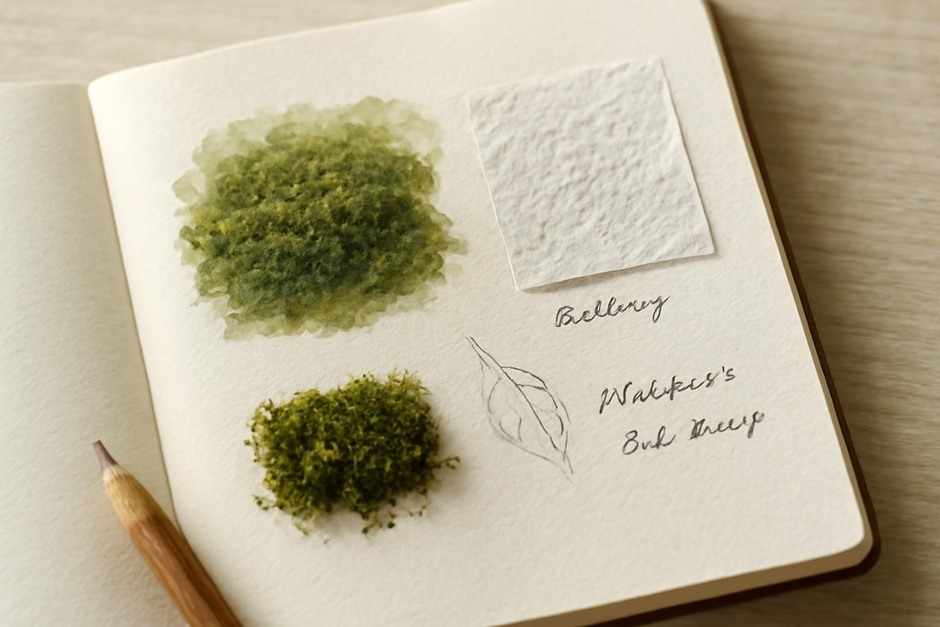
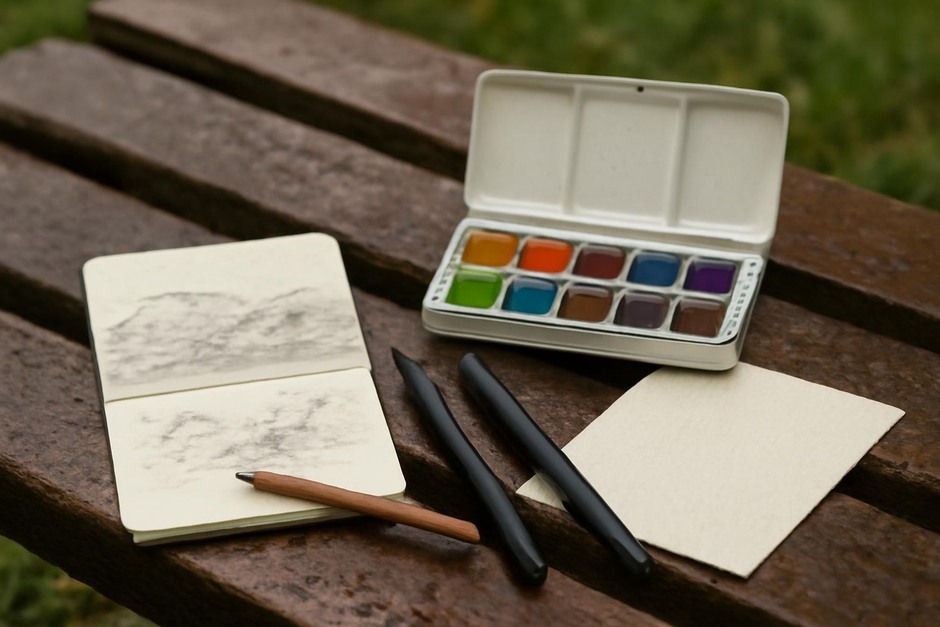
Small metal pans or half-pan sets are available that accept a damp brush and a limited palette. These are useful for capturing instant colour relationships—cold shadows, the warm of a late leaf, or the way wet bark deepens in hue. A few practical notes: choose a palette with 4–6 pigments you know well; carry a collapsible water container and a stiff backing board for support; accept that puddles and drizzle will affect drying times and sometimes deepen colours unexpectedly.
Dry media: coloured pencils and pastels
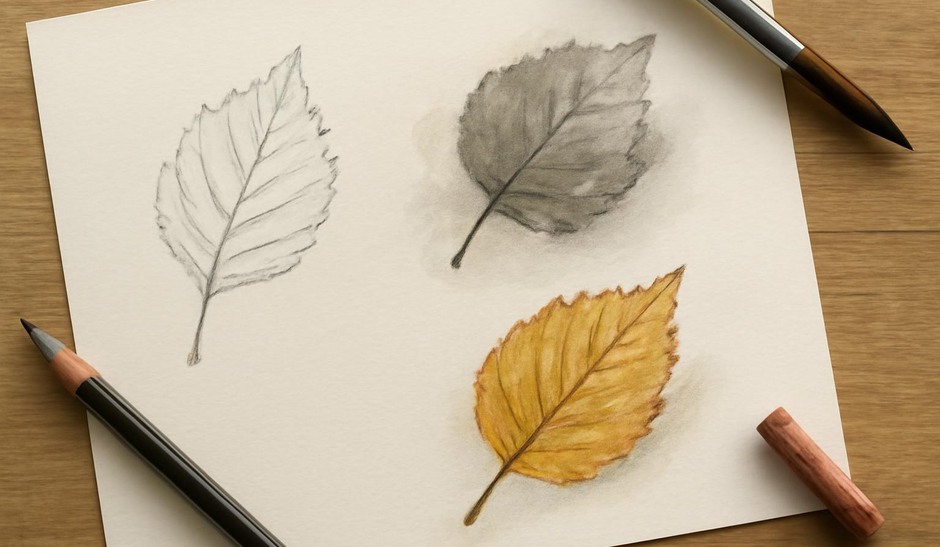
Coloured pencils are portable, controllable and work well over pencil underdrawing. They are less affected by sudden humidity changes than wet paints. Soft pastels offer strong surface texture quickly but require a protective sheet to prevent smudging in transit. Both media reward layering and small blending tools; they can be useful when you want immediate colour without a wet palette.
Paper and sketchbook formats
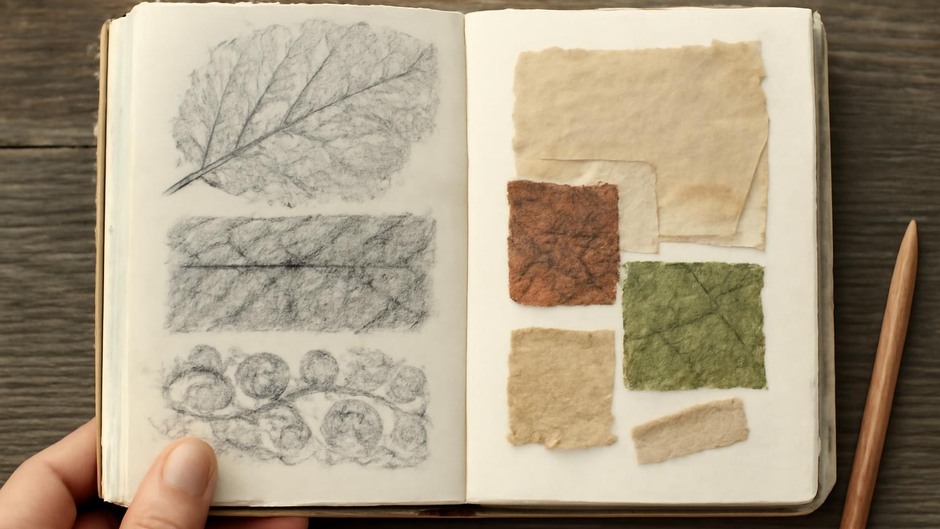
Paper choice is a frequent point of comparison. A 140–200 gsm cold-pressed paper handles light washes and some reworking. Lighter weight sketchbooks (90–120 gsm) stay compact but buckle under watercolour. Consider hybrid sketchbooks with mixed paper types or use full-size pockets to mount small sheets. Spiral bindings open flat, which helps when working on a lap; glue-bound journals keep pages secure and offer a quieter experience when carrying a single book.
Weatherwise habits
- Organize a small kit: pencil, pen, eraser, a limited palette, brush, water container and a cloth.
- Use a lightweight board or clip to stabilize pages in wind.
- Carry a zip pouch or resealable bag to protect paper and pigment pans from sudden dampness.
These options present different rhythms of working. Pencil and pen emphasize drawing and mark-making; watercolour brings immediate colour decisions; dry media invite tactile layering. Testing them side by side on short outings reveals which combinations support your attention during different seasons and conditions.
One practical experiment is to sketch the same subject three times in succession—first in pencil, then in pen, then in watercolour—over a single hour. The repetition clarifies how each material directs your focus and how weather subtly changes handling and appearance. Carrying a minimal kit and practicing the comparison helps develop reliable choices for future outings.