Seasonal Colour Palettes: Observing Subtle Shifts in Hue Outdoors
Seasonal Colour Palettes: Observing Subtle Shifts in Hue Outdoors
Season changes are often described dramatically—vibrant autumn leaves, fresh spring green—but the more instructive shifts can be subtle: a cooling of green in late summer, a blue-gray dusting on early winter bark, or the way wet ground deepens local colour. This studio-note compares several simple methods for observing and recording these shifts so your palette can mirror seasonal nuance.
Daily swatches: small, immediate records
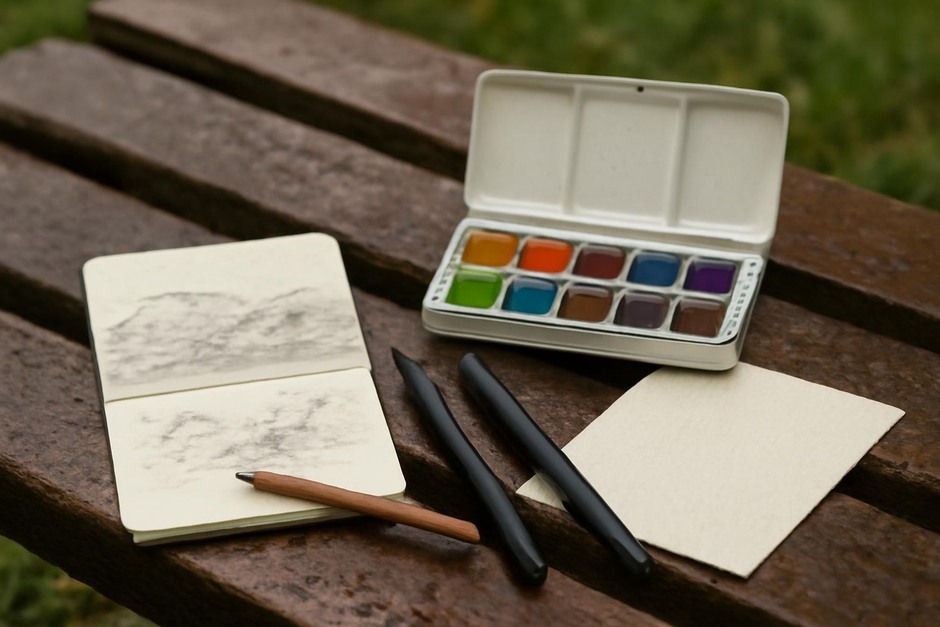
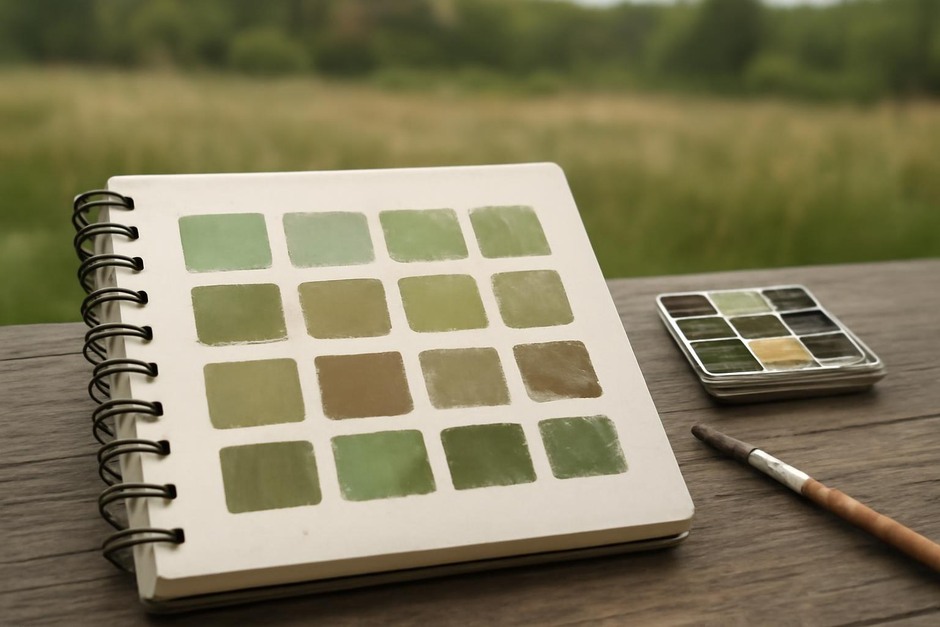
Carry a tiny watercolour palette or a few coloured pencils and paint a single swatch each day you observe. Keep the swatches small—two centimetres square—arranged by date on a page. The advantage is consistency: repeated sampling of light and surface on the same substrate builds a temporal sequence that makes gradual changes visible. Challenges include time: daily sampling requires discipline, and conditions vary, so colorimetric precision is not the goal. Rather, daily swatches train your eye to notice shifts in saturation, temperature and value.
Seasonal limited palettes: learning by restriction
Choose 4–6 pigments to represent a season, then use that constrained palette to paint small studies across the weeks. For example, an autumn palette might use a warm yellow, a muted red, a cool green and a deep brown. Working within limits helps you recognize how colours interrelate and how a few mixes can cover a surprising range of observed hues. This approach favors composition and mixing practice over literal matching.
Comparison panels: side-by-side samples
Create side-by-side panels that sample the same subject across different dates. Mount identical small squares and paint the subject from the same viewpoint over several weeks. Comparison panels make subtle variations immediate: the green cooling into olive, the way light becomes less intense and casts greener shadows in some months. This method is slower but useful when you want to study specific sites like a favorite hedgerow or a single tree.
Notes on materials and consistency
Material choices affect perception. Watercolour shows transparency and subtle glazing, while gouache records opaque shifts. Coloured pencils are excellent for small, repeatable swatches and tidy records. Maintain consistent tools when you want to compare samples; changing pigments or paper weights will introduce variables that confuse observation. Carry a small note beside each swatch recording time of day, light (sunny, overcast), and a brief weather note.
Practical experiments
- Pick a single small scene and make three swatches per week for eight weeks. Arrange them chronologically and write a short note on perceived temperature shifts.
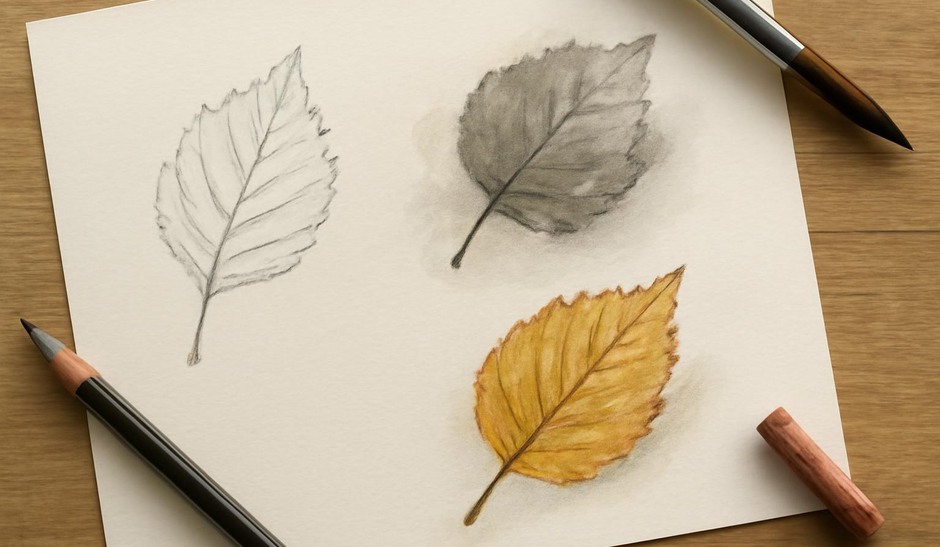
- Create two limited palettes—one warm and one cool—and paint the same leaf using each to see how restricted mixing changes colour relationships.
- Paint a side-by-side comparison panel of a stone or fence post at sunrise and mid-afternoon to record how changing light alters local colour.
These methods are complementary. Daily swatches cultivate steady attention, limited palettes develop mixing skill and comparison panels clarify cumulative changes. Choosing which to try depends on your time and what you wish to learn about seasonal colour—whether it is the slow drift of hue over weeks or the immediate way light redefines a surface in minutes.
Working with any of these methods encourages a slower, more precise relationship with the landscape. Over a season, a small collection of intentional swatches becomes a personal colour map that informs studio work and deepens visual memory.