Texture Studies: Rubbing, Scumbling, and Collage in Nature Journals
Texture Studies: Rubbing, Scumbling, and Collage in Nature Journals
Texture is an information-rich aspect of any outdoor subject. Bark tells of growth cycles; stones preserve history in layers; leaves show veins and worn edges. This studio-note compares three approachable methods for recording surface character: frottage (rubbing), scumbling with dry media and collage. Each method attends to different aspects of texture and invites specific observational habits.
Frottage (rubbing): direct surface capture
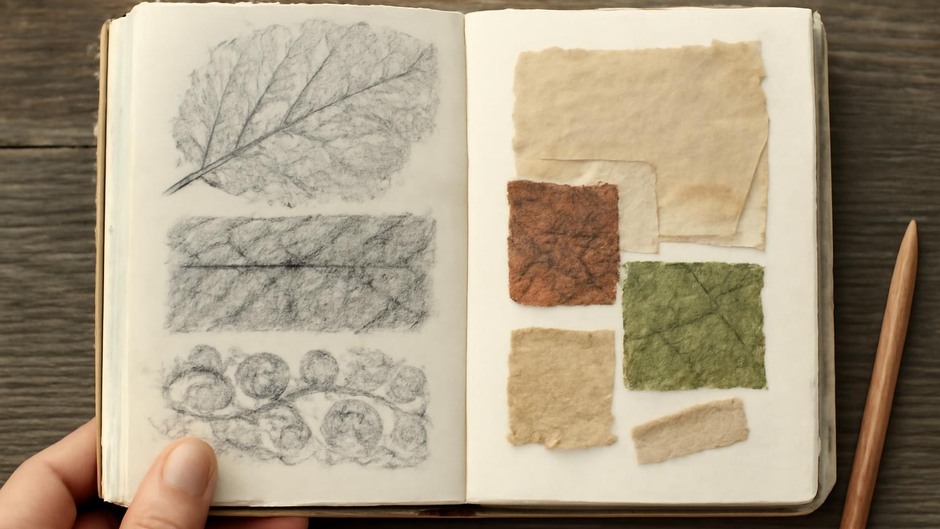
Frottage is the act of placing paper over a textured surface and rubbing with a soft pencil, charcoal or crayon to reveal peaks and valleys. It produces an immediate, objective map of relief. Outdoors, a lightweight sheet and a pencil or wax crayon are all you need. Use thin, archival paper when possible; thicker papers may obscure fine detail. Frottage excels at revealing micro-topography—lichen patterns, flaking bark, the grain in an old fencepost.
Limitations are practical: rubbing requires good contact, which is harder on curved or irregular forms. Rubbings are also literal; they don’t interpret scale well without notation. Consider pairing frottage with brief written notes on scale and orientation.
Scumbling with dry media: gesture and suggestion
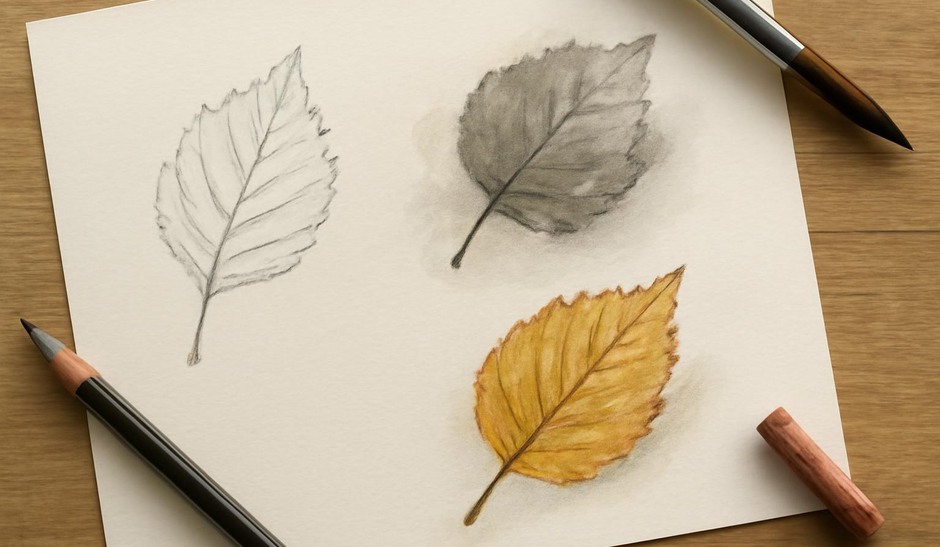
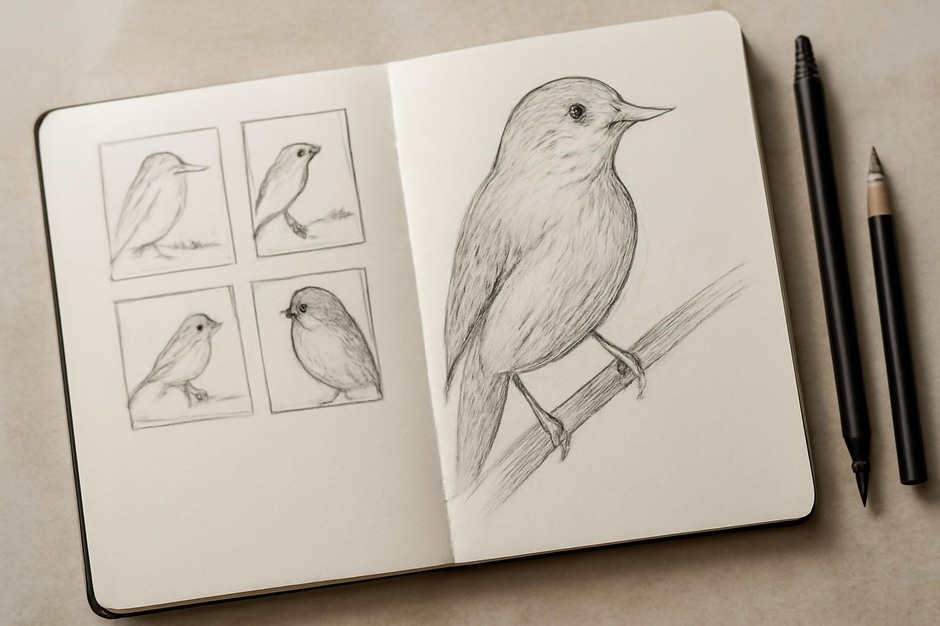
Scumbling describes a layering of broken, circular or back-and-forth marks with dry media such as graphite, charcoal, or coloured pencils. Unlike frottage, scumbling is interpretive. It emphasizes the artist’s perception of texture through mark rhythm, pressure and density. In the field, scumbling is fast and portable: sketching the interplay of roughness and smooth patches can be done at a glance and refined later.
Scumbling invites subjective choices—where to accent shadow, how to imply depth—so it becomes a dialogue between observation and expressive shorthand. It pairs well with small drawings and quick annotations about tactile impressions that a rubbing alone might not convey.
Collage: assembling texture and context
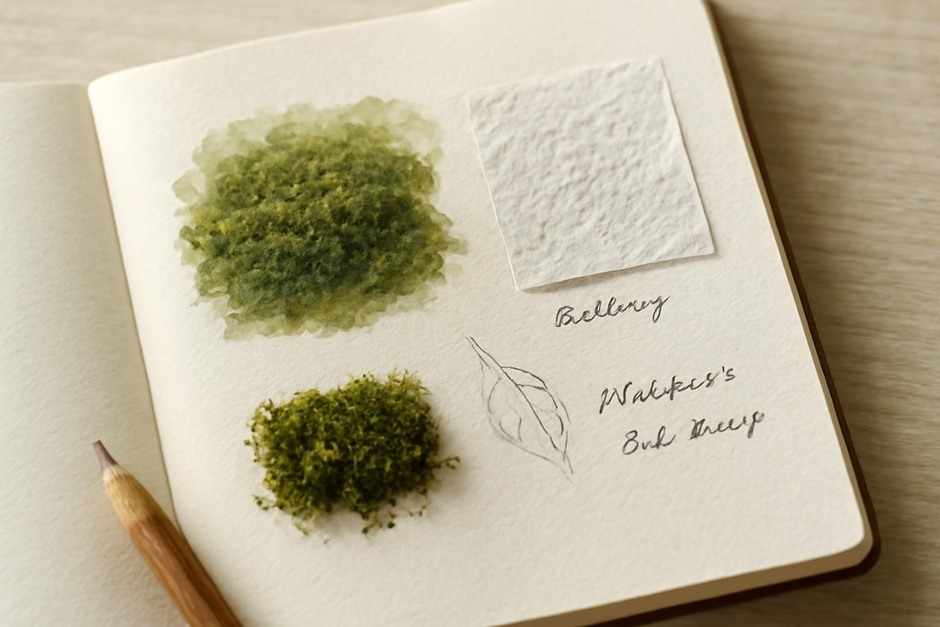
Collage uses small fragments—pressed leaves, paper scraps, thin bark, or torn cloth—to recreate the feeling of surface through physical material. In practice, a nature-journal collage can be assembled on site using pre-cut paper shapes and an adhesive that won’t damage specimens. Collage is tactile and spatial; it conveys scale relationships and material contrast effectively.
Ethical considerations matter: avoid removing living material when it harms plants or habitats. Collect shed fragments, fallen leaves or small pieces already detached. Collage offers both material fidelity and compositional control: you can amplify contrasts or compress textures to explain relationships clearly.
Comparing outcomes and combining methods
Each method highlights different realities. Frottage records surface geometry; scumbling captures perceived rhythm and tonal variation; collage reproduces material presence and scale. Combining methods enriches the record. A common sequence is to make a rubbing for factual texture, do a quick scumbled sketch to note light and shadow, and then create a small collage in the studio using collected fragments to anchor colour and mass.
Practical exercises
- Choose one tree trunk and make a rubbing, then a scumbled sketch from three different distances (close, medium, and a few meters back). Note differences in perceived texture.
- Collect only fallen fragments and assemble a small collage that emphasizes contrast between smooth and rough elements.
- Compare all three results and jot a short note on which method best communicates tactile information you care about.
These methods are not mutually exclusive. They are tools for different questions: what is the surface like, how does it read from a distance, and how can material fragments reinforce perception? Trying them in sequence promotes a fuller visual literacy of the outdoor scene.