Recording Ground: Soil and Moss Texture Techniques in Journals
Recording Ground: Soil and Moss Texture Techniques in Journals
The ground is often overlooked, yet it contains rich texture and colour variation that speak to moisture, age and microclimate. Soil, lichen, moss and leaf litter make excellent subjects for careful study. This studio-note compares three approaches—close focal sketches, tonal mapping and ethical fragment inclusion—to help you build a more attentive record of ground surfaces.
Close focal sketches: detail from a single viewpoint
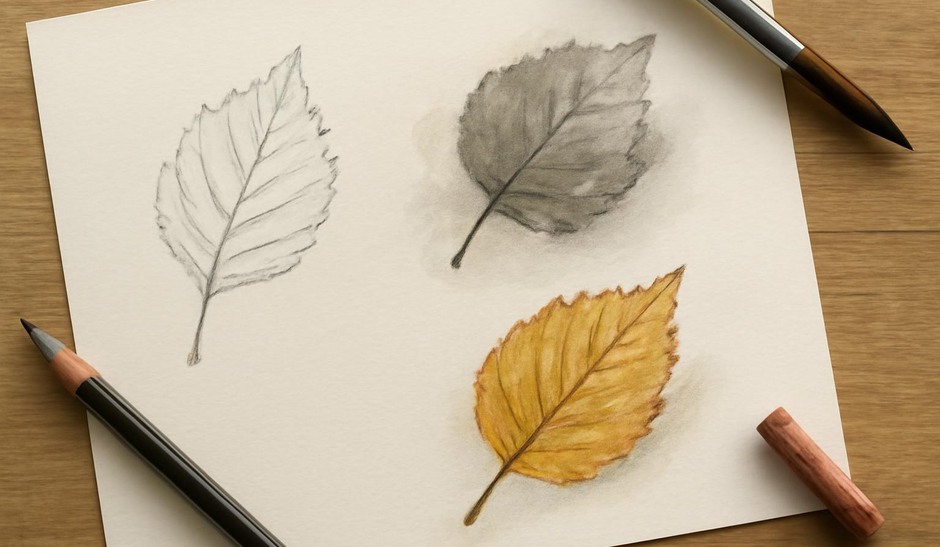
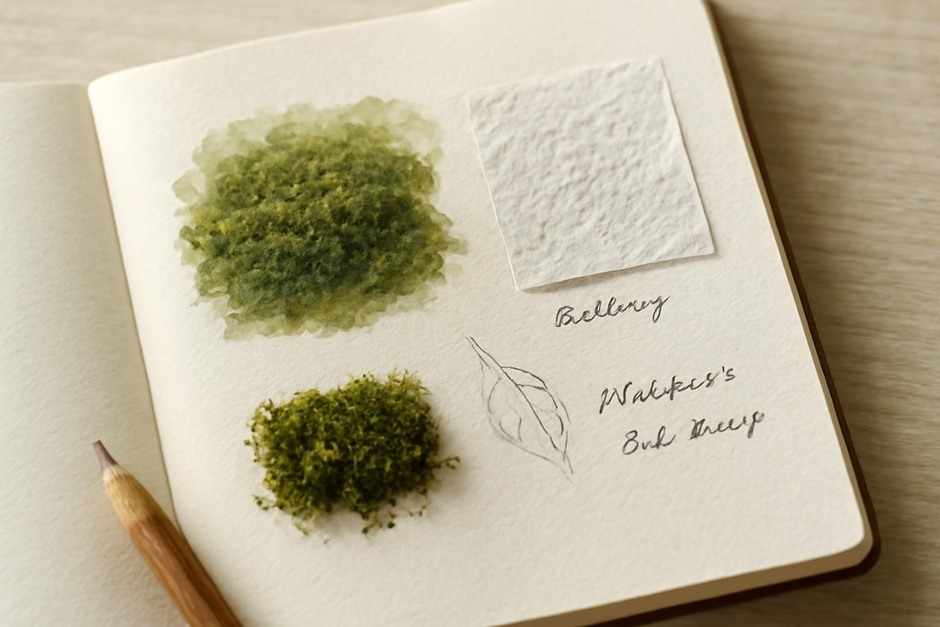
Close focal sketches involve choosing a small patch of ground and working at a low angle or directly above to render the pattern of moss cushions, soil granules and decomposing leaf matter. Graphite or coloured pencil is effective for this precision work. Focus on relationships—how the moss forms cushions, where light catches a wet cap, and how soil aggregates cluster around roots. Time investment is moderate; a single detailed sketch can take 20–40 minutes, but it yields fine structural information useful for scientific observation or later studio texture work.
Tonal mapping: documenting moisture and value
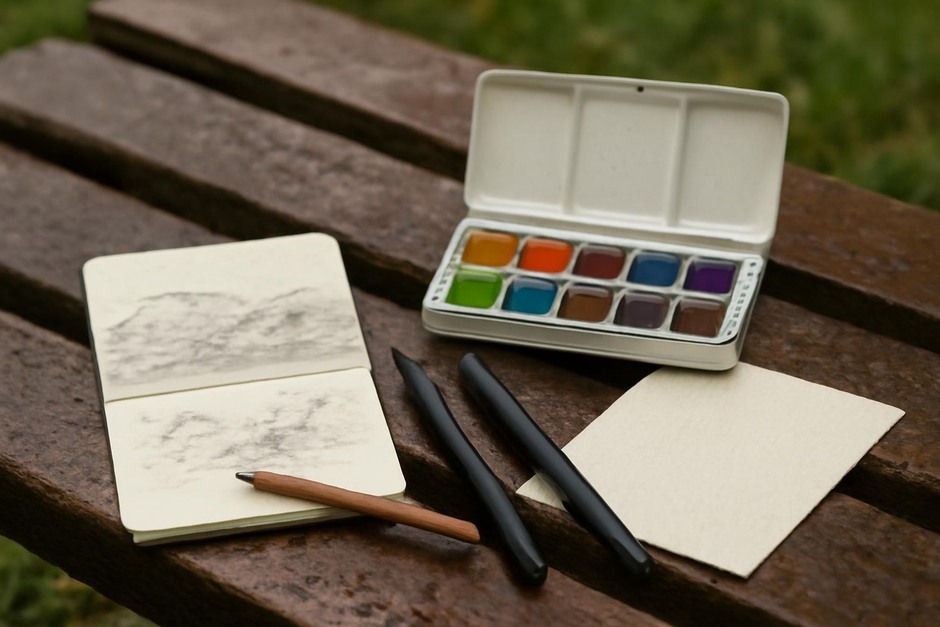
Tonal mapping abstracts texture into values to show relative moisture levels and shadow. Use a soft pencil or charcoal to indicate darkest and lightest areas and mid-tones. Tonal maps are quick and emphasize functional information: where the ground holds water, which patches reflect light, and which areas are shaded. This method is especially useful after rain when moisture gradients are pronounced.
Tonal studies translate well into compositional decisions later. They help you see the value patterns that will guide a larger painting or a set of comparative studies across different sites.
Ethical fragment inclusion: collage with restraint
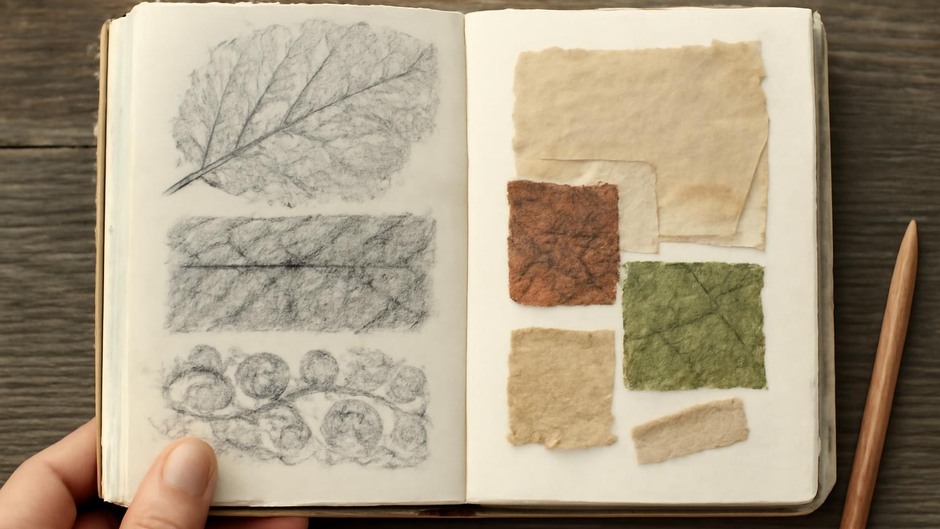
Including small fragments—fallen moss clumps, tiny stones, or leaf pieces—adds material truth to a journal page. Collect only what is already detached to avoid damaging living organisms. Attach fragments with minimal adhesive and label them with date, location and a brief note on moisture. Fragments provide tactile reference and a scale anchor that drawings alone may not convey.
Be mindful of specimen preservation; organic fragments will change over time. Consider pressing small pieces flat between blotters if you wish to keep them long-term, or use high-quality scans and photographs if preservation is not practical.
Comparing outcomes and combining methods
Each method highlights different qualities. Close sketches reveal morphologies; tonal maps clarify environmental conditions; fragments add material confirmation. Using them together creates a layered record: a tonal map can be sketched first to understand value relationships, a detailed focal drawing can follow to document form, and a tiny fragment can be attached to verify texture or colour.
Practical exercises
- On a damp morning, make a tonal map of a 20 cm square of ground in five minutes. Note moisture gradients.
- Create a 30-minute close sketch of a moss cushion, paying attention to scale of the individual filaments and shadow.
- Collect a single fallen fragment to mount beside your sketches, labeling date and conditions.
Recording ground textures encourages careful, patient looking. These methods are small experiments you can repeat across seasons to note changes in colour, density and moisture retention. Over time, the accumulation of focused ground studies will reveal patterns that inform both field practice and studio work without requiring grand gestures—only consistent attention and a modest toolkit.